
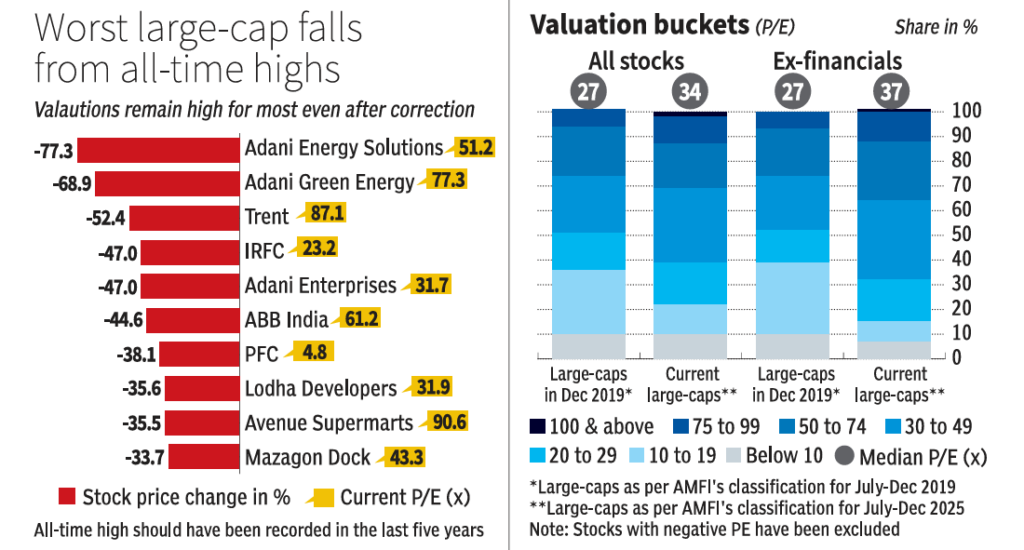
Large-Caps Are Not Immune to Falls
- Despite being seen as "safe," many large-cap stocks have fallen sharply from their peaks.
- Example: Trent (a large-cap) fell ~10% after reporting good growth and is down over 52% from its 2024 peak.
- Of 100 large-caps, 42 are trading at least 20% below their all-time highs.
It’s common advice: when markets get risky, shift to "safe" large-cap stocks. But recent trends suggest this mantra needs a rethink.
Many blue-chip stocks have fallen sharply from their peaks. Trent, for instance, dropped 10% after solid results and is down over 50% from its 2024 high. Of 100 large-caps, 42 trade at least 20% below their all-time highs.
The core issue? Extreme valuations. Many still trade at sky-high P/E ratios (some over 80x or even 1000x!), despite recent corrections. These prices were easier to justify in an era of strong earnings growth and abundant global liquidity. That era is ending.
Now, three pressures are testing these valuations: stock prices that raced ahead of earnings, sharp cuts to future profit estimates, and visible growth slowdowns in companies like Trent.
The takeaway? Large-caps are not automatically safe. With the global liquidity cycle tightening, 2026 is set to be a reality check, where fundamentals—not just sentiment—will determine true value. Investors should look beyond the label and scrutinize price, growth, and earnings durability more than ever.
About the Author