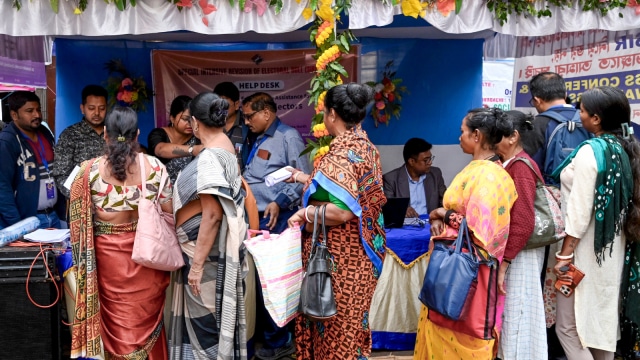
The Special Intensive Revision (SIR) of electoral rolls in India is a large-scale exercise meant to update and verify voter lists before upcoming elections, but it has become politically contentious due to allegations of mass deletions and uneven progress across states.
Political Context and Controversy
The SIR has sparked heated debate among political parties. Opposition leaders argue that the process risks disenfranchising millions of voters, especially in politically sensitive states. Some have compared it to a citizenship audit, warning that large-scale deletions could disproportionately affect marginalized communities. This framing has amplified media coverage and fueled local mobilization efforts The Indian Express.
Election Commission Actions and Oversight
To counter these concerns, the Election Commission of India (ECI) has appointed Special Roll Observers (SROs) in eight major states, including West Bengal, Tamil Nadu, Uttar Pradesh, Gujarat, Kerala, Madhya Pradesh, Chhattisgarh, and Rajasthan. These observers meet regularly with political parties and state election officials to ensure uniform procedures, transparency, and faster grievance redressal. Their presence is intended to reduce errors and prevent politically sensitive deletions The Hans India.
Timelines, Coverage, and State Deadlines
The SIR spans 321 districts and 1,843 assembly constituencies, covering nearly 51 crore electors across nine states and three Union Territories. Deadlines vary:
- Tamil Nadu & Gujarat: Enumeration until December 14, draft rolls on December 19.
- Madhya Pradesh, Chhattisgarh, Andaman & Nicobar: Enumeration until December 18, draft rolls on December 23.
- Uttar Pradesh: Enumeration until December 26, draft rolls on December 31.
These schedules were revised after requests from state Chief Electoral Officers to give voters more time The Indian Express Central Chronicle.
Digitisation and Progress Metrics
Digitisation is uneven. Goa is leading with high percentages of forms digitised and draft rolls nearly ready, while Kerala is trailing due to slower form uploads. Smaller states and UTs generally report faster progress, while larger states face logistical challenges. The speed of digitisation directly affects how quickly draft rolls can be published and objections processed, making it a critical metric The Indian Express.
Draft Roll Publication and Next Steps
Draft rolls are scheduled for mid-December publication in most states, though Kerala’s timeline has been extended. Once published, voters will have a window to file objections or corrections before the final rolls are notified in early 2026. The qualifying date for all revisions remains January 1, 2026, ensuring consistency across states Central Chronicle Press Information Bureau.
Key Takeaways
- Political pushback: Allegations of exclusion and mass deletions dominate the debate.
- Oversight strengthened: SROs deployed to ensure transparency and fairness.
- State deadlines vary: Tamil Nadu, Gujarat, MP, Chhattisgarh, UP, and Kerala all have different schedules.
- Digitisation uneven: Goa ahead, Kerala behind.
- Next steps: Draft rolls → objections → corrections → final notification.

About the Author